main partner
10—13.12.26 Antwerp Expo
main partner

Alongside the eleven solo booths, six galleries at Art Antwerp 2025 will present duo exhibitions that foster dialogue between two distinct artistic practices. These pairings will invite visitors to explore connections and contrasts — from shared themes and materials to divergent perspectives that spark new interpretations. Whether based on generational encounters, aesthetic affinities, or conceptual contrasts, the duo format celebrates exchange and resonance within contemporary art.
True to the fair’s intimate scale, the duo booths embody Art Antwerp’s commitment to depth and discovery, offering visitors the chance to witness how two creative voices intertwine and enrich one another. Discover below the six galleries* and the artists they are presenting in duo exhibitions at the fair.
*Text descriptions provided by the galleries.
1. Ilona Plaum & Marjolein Rothman with Dudokdegroot
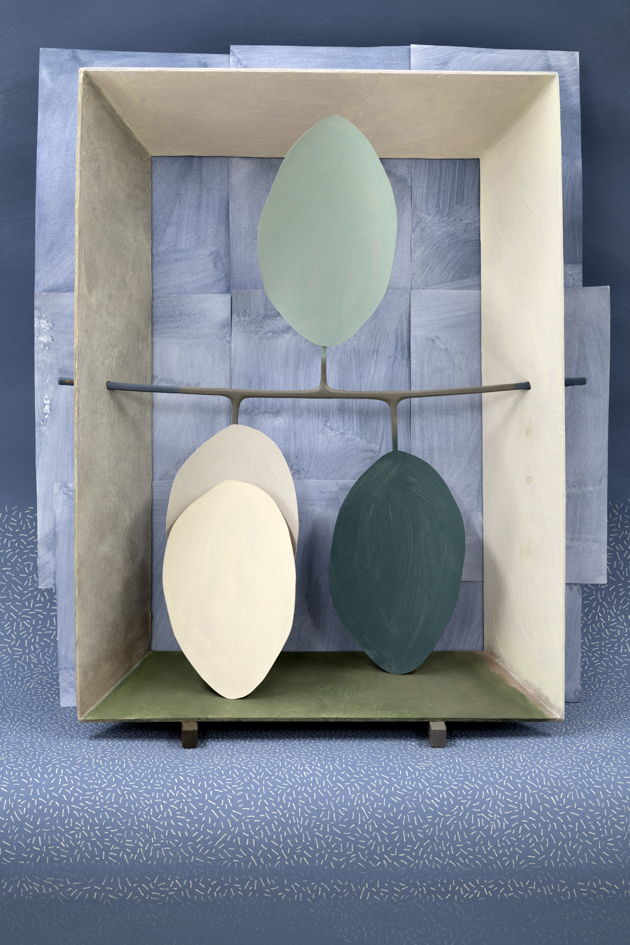
Ilona Plaum, Presence w30 (2024), archival pigment print, 144 x 98 cm
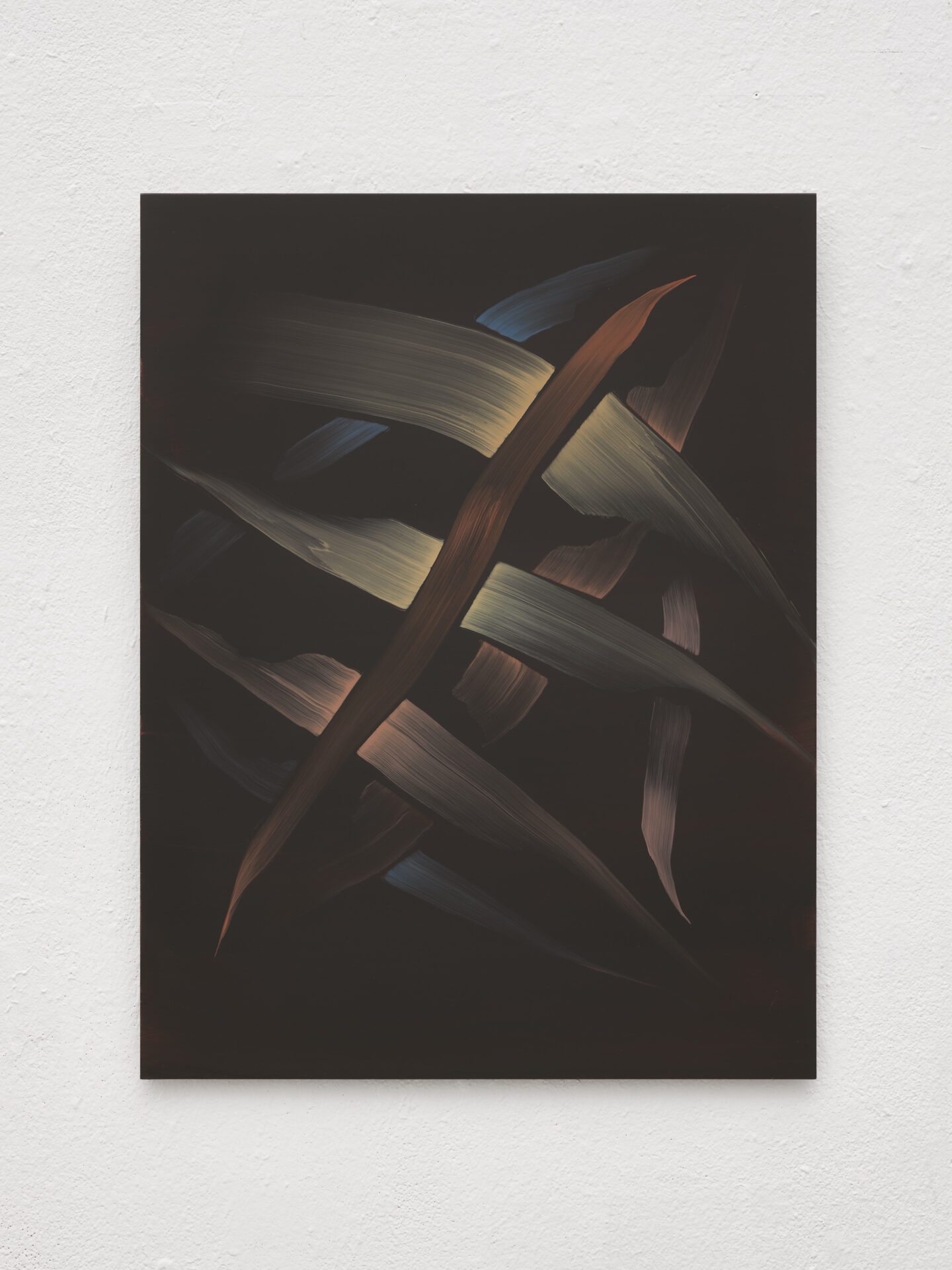
Marjolein Rothman, Foliage IX (2025), 65 x 50 cm
dudokdegroot presents a duo show with recent works by: Ilona Plaum (photography) and Marjolein Rothman (paintings). dudokdegroot is interested in artists who explore the boundaries of their medium.
In the work of Marjolein Rothman (NL, 1974), photography serves as an important point of reference—particularly its supposed ability to freeze time. In series of paintings that start from the same point of departure, Rothman reveals the impossibility of capturing a single moment and shows how the meaning of an image shifts further with each glance. The paintings are created in one continuous session, with an emphasis on the act itself. —the performative nature of painting. For Rothman, the moment of creation is decisive; it coincides with the time that is captured in the painting. From time to time, Rothman painted flowers and plants because of their symbolic meaning, often combined with other archetypal images such as monuments and official portraits, which relate to themes like power and the human desire to defy transience.
Ilona Plaum’s (NL, 1970) 3D maquettes, painted scenes, and photographic flat surfaces are linked by illusions. In these illusions she observes the rules of paradox: she switches between surface and depth perception, and turns backgrounds into foregrounds; shadows become tangible and seem to move. In so doing Plaum transports the viewer from invented spaces to real ones, and vice versa. The small imperfections that she intentionally leaves visible in the work make it clear that the elements of these illusions were created by hand. This momentarily brings the viewer back to the starting point of the work: the moment the artist actually made it. On show will be works from her recent solo in Huis Marseille in Amsterdam.
2. Anthony Ngoya & Jaya Pelupessy with Galerie Caroline O’Breen
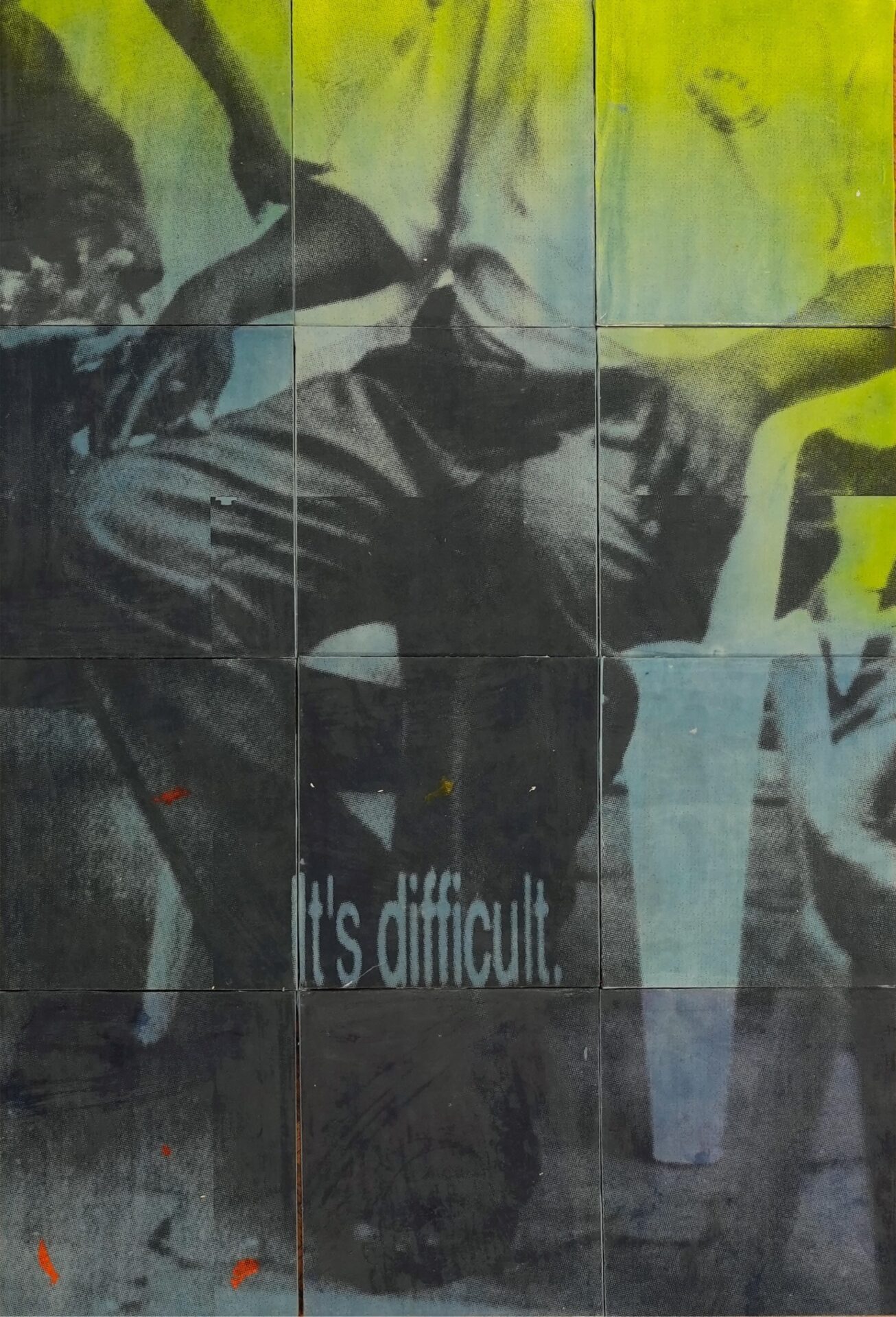
Anthony Ngoya, It's difficult., 2024, Scanned photo transfer on acrylic-dyed fabric, spray paint, 150 cm x 100 cm x 5 cm. Courtesy Anthony Ngoya / Galerie Caroline O’Breen
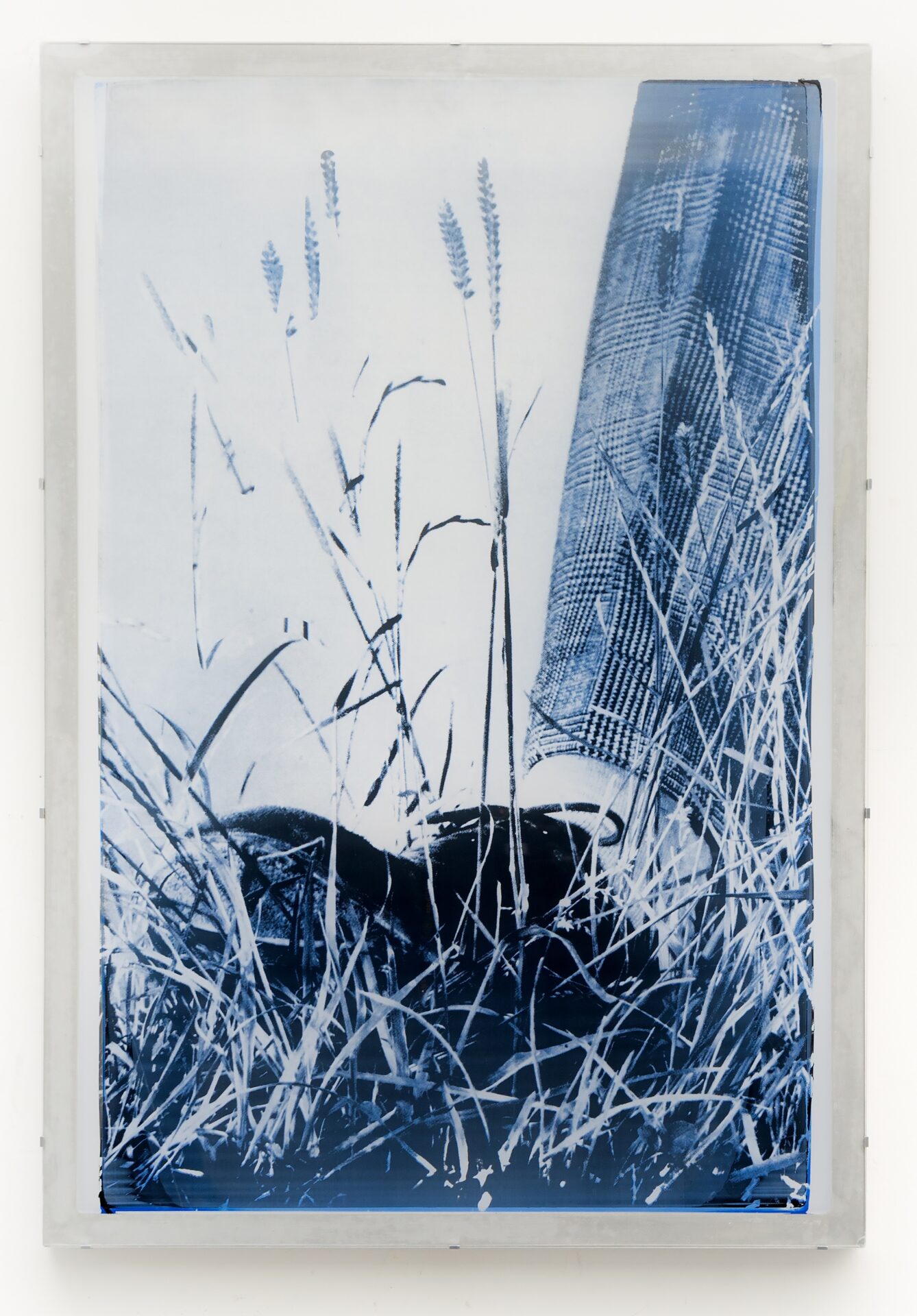
Jaya Pelupessy, Pictorial Fields, No. 16, 2024, Two color exposure on silkscreen, Aluminum silkscreen, plexiglas, wood, 135 x 93 x 6 cm. Courtesy Jaya Pelupessy / Galerie Caroline O’Breen
Caroline O’Breen will present a duo-presentation of the following artists: Anthony Ngoya and Jaya Pelupessy.
Anthony Ngoya (1995, FR) is a French artist of Congolese origin who lives and works between Belgium, the Netherlands and England. Ngoya’s practice engages with collective memory, emotional archive, and diasporic longing residues. The artist draws from personal and collective sources such as family albums, press archives, construction debris, and urban scraps. Through various processes of layering and diffusing images, objects, and materials, Ngoya investigates the construction of memory and identity. How can different materials be layered into painterly and photographic sculptures, such that they become meaning carriers of intergenerational emotions and collective memory?
Jaya Pelupessy (1989, NL) uses photography to investigate the medium’s status. Central to his work are the processes that lead to autonomous images; an examination of to what extent the process itself and the visibility of that process strengthens, invalidates, or delivers new autonomous images. Countless ‘loops’ within his own work emerge, within which
reproductions are again reproduced.
Jaya Pelupessy’s works present a conceptual and alternative reading of photography. He explores the early technical history of photography to arrive at a reinterpretation of the photographic medium. In ‘Pictorial Fields’ Pelupessy zooms in on the photographic surface, focusing on the analysis of individual pixels or dots. As a result, the works become almost abstract, shifting from examining what is photographed to a deeper exploration of the photograph itself. The title of the series refers to both the representational qualities and limitations of photography, placing it within the context of abstract expressionism.
3. Inez de Brauw & Ruud van Empel with Galerie Fontana
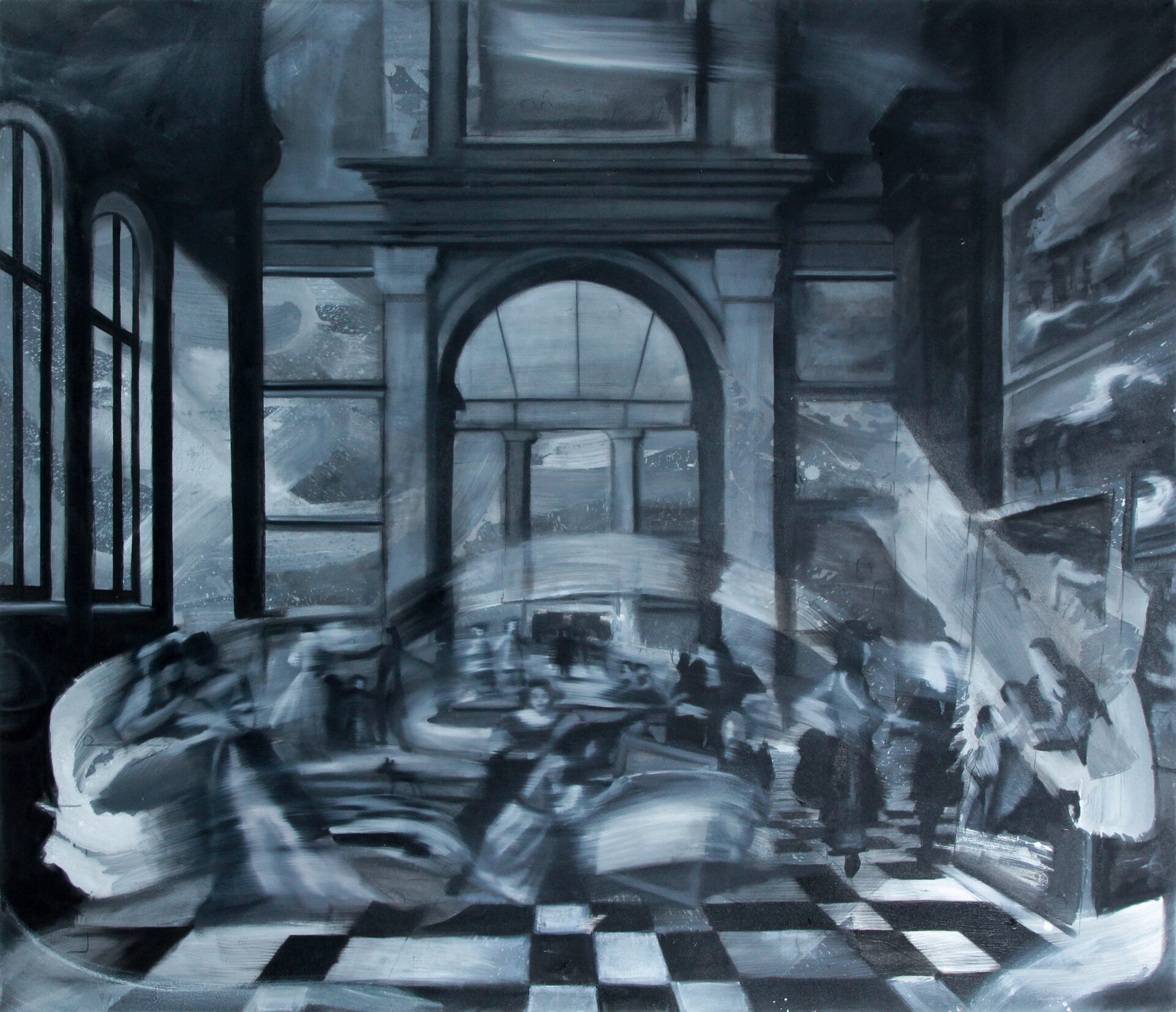
Inez de Brauw, Between framed lines (2025), Oil and acrylic on canvas, 155 × 180 cm
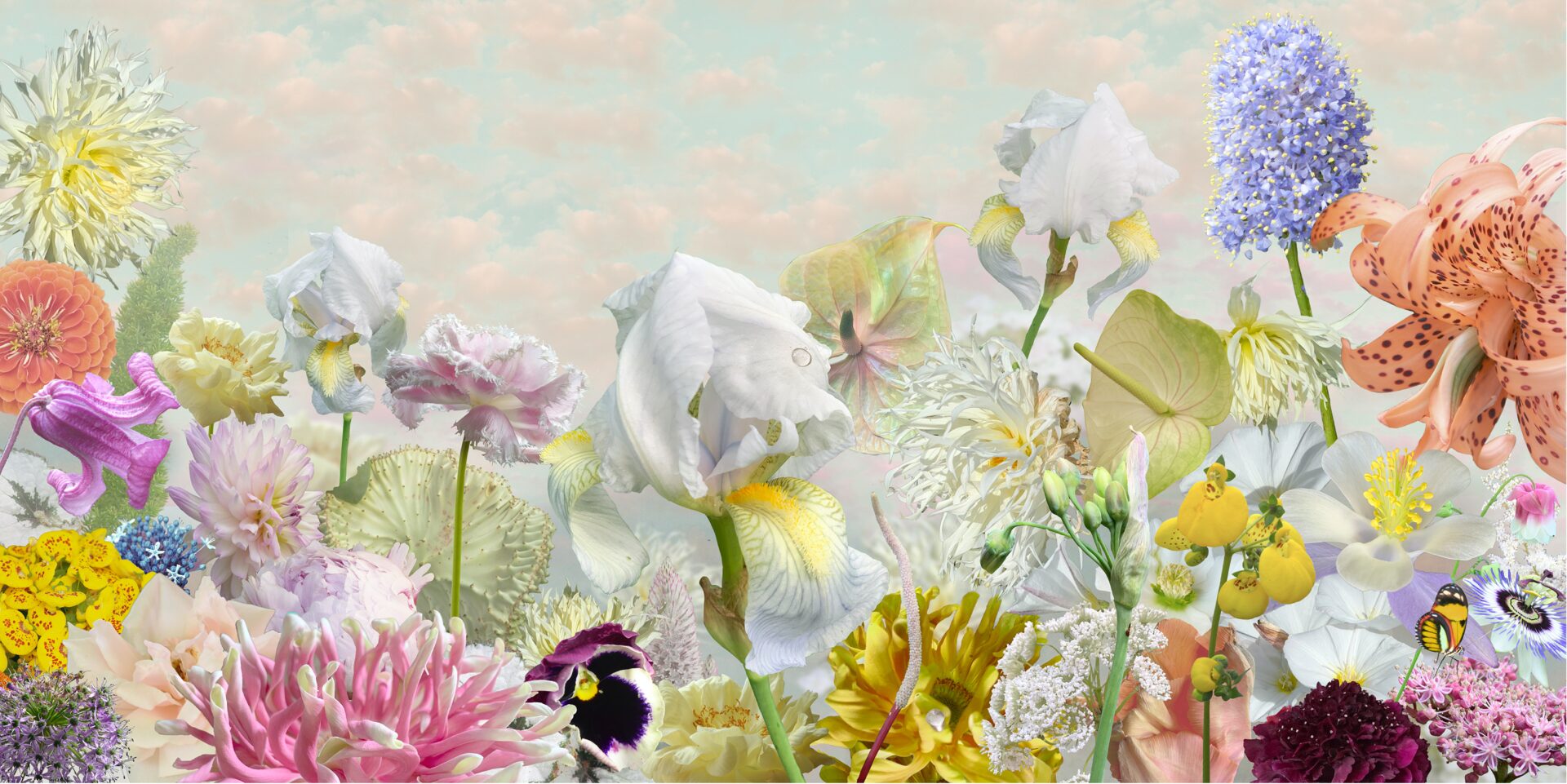
Ruud van Empel, Voyage Pittoresque 12 (2024), Archival print, 78 × 140 cm
Galerie Fontana returns for its third participation as an exhibitor at Art Antwerp. This year, the gallery presents works by two Dutch artists, Ruud van Empel and Inez de Brauw, both of whom explore themes inspired by 17th-century painting within a contemporary context.
Inez de Brauw draws from the tradition of Flemish gallery paintings, reinterpreting them through a modern lens. In her latest work, she addresses themes of female empowerment by subverting traditional power dynamics depicted in historic scenes. Her approach, which she describes as “erasing history,” involves deliberately reworking compositions to shift their narratives. While her earlier work often focused on the mise en abyme effect and architectural interiors, her new pieces have evolved, becoming more vibrant and rich with details that reflect the social life of the 17th century.
Ruud van Empel contributes two new works to his ongoing series, Voyage Pittoresque, both rendered in soft pastel tones and filled with lush, floral imagery reminiscent of the 17th-century nature morte (still life) tradition. Central to his practice is his signature photographic collage technique: drawing from an extensive, self-created image archive, Van Empel meticulously cuts and composes individual photographs into dreamlike scenes, producing a surreal, almost intangible atmosphere that blurs the line between reality and imagination.
4. Frea Buckler & Clara Cousineau with KlotzShows
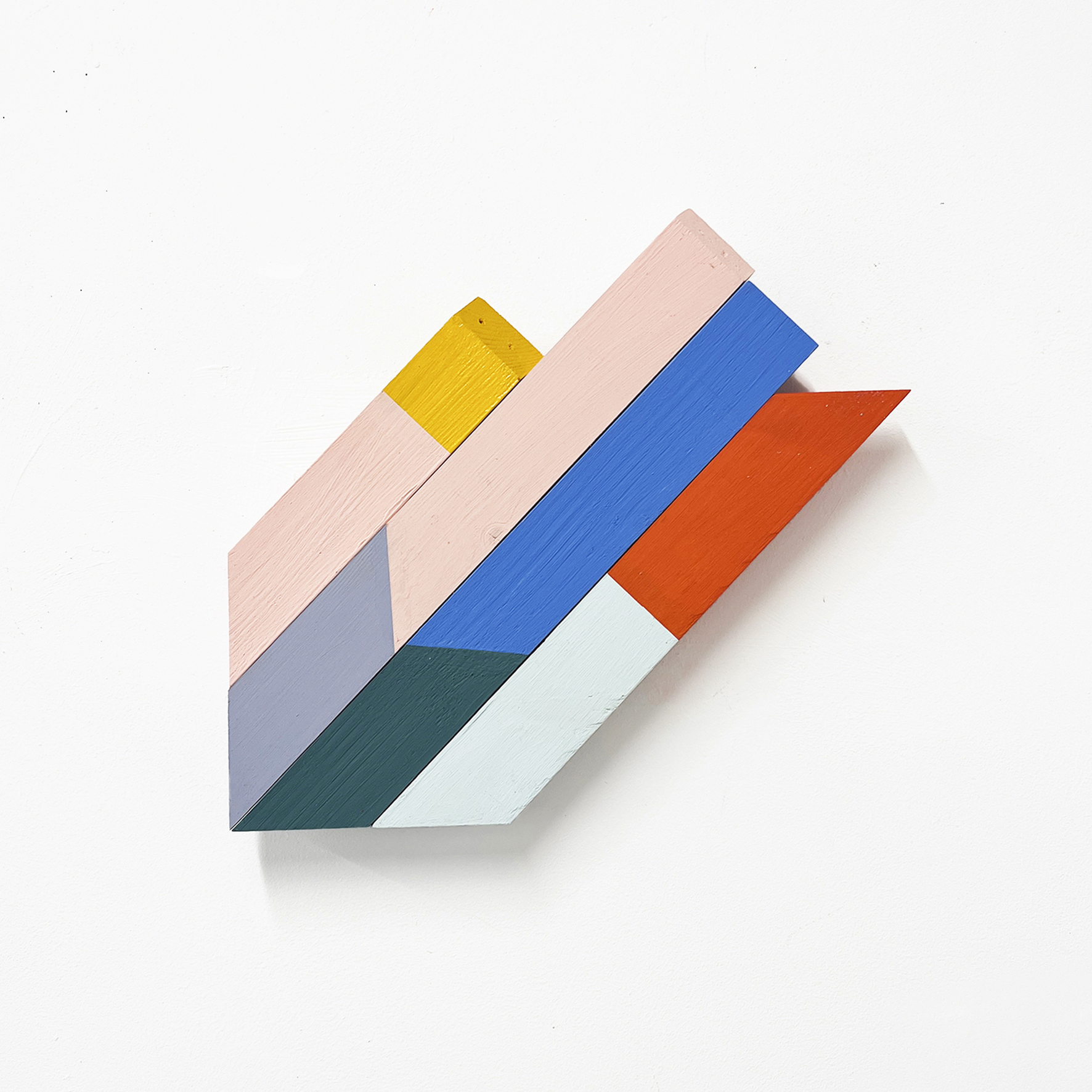
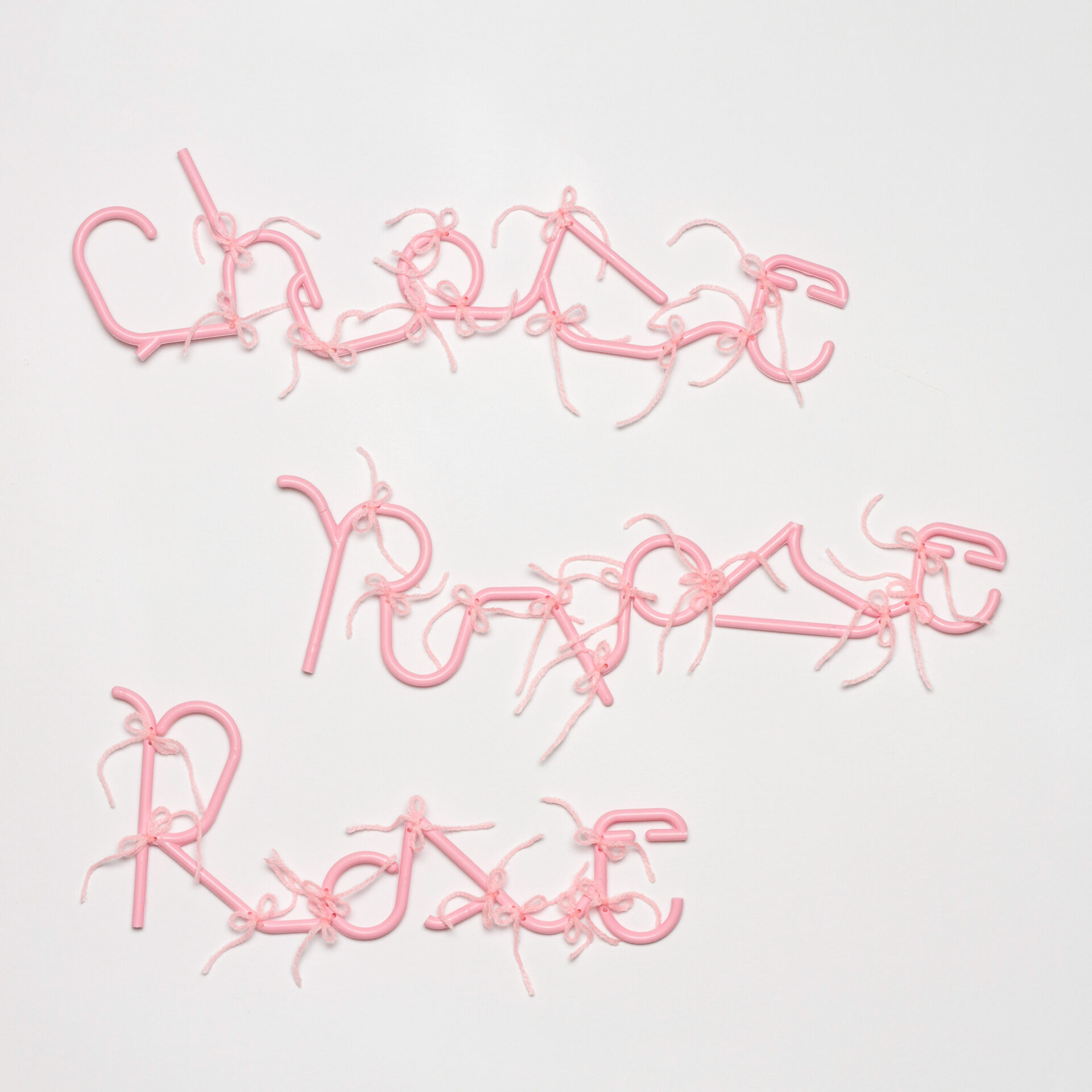
© Frea Buckler
© Clara Cousineau
KlotzShows presents a booth featuring two artists of different generations and geographic origins. While their artistic approaches stem from distinct reflections, interesting touchpoints emerge between their works, which have already led to collaboration.
Frea Buckler works in abstract painting, sculpture, and installation, including projects in the public realm. Her approach embraces uncertainty, beginning with quick gestures or unfamiliar materials that provoke challenges she resolves through experimentation and iteration. Clara Cousineau investigates the relationship between language and object through a body of sculptural and print-based works. She has created her own alphabet—a sculptural typography derived from domestic objects, transformed into 3D-printed logograms, which are then used to write coded texts. By juxtaposing these object-characters with historical typographic materials, Cousineau reactivates remnants of the printed press to highlight its contemporary transformations.
Following an introduction by Robert Klotz, both artists engaged in a fruitful collaboration in 2023 for the opening of Espace Transmission in Montreal, a vibrant art space run by Clara and her brother Alexis. One of these collaborative works is being presented at Art Antwerp.
5. Kévin Bray & Jen Liu with Upstream Gallery
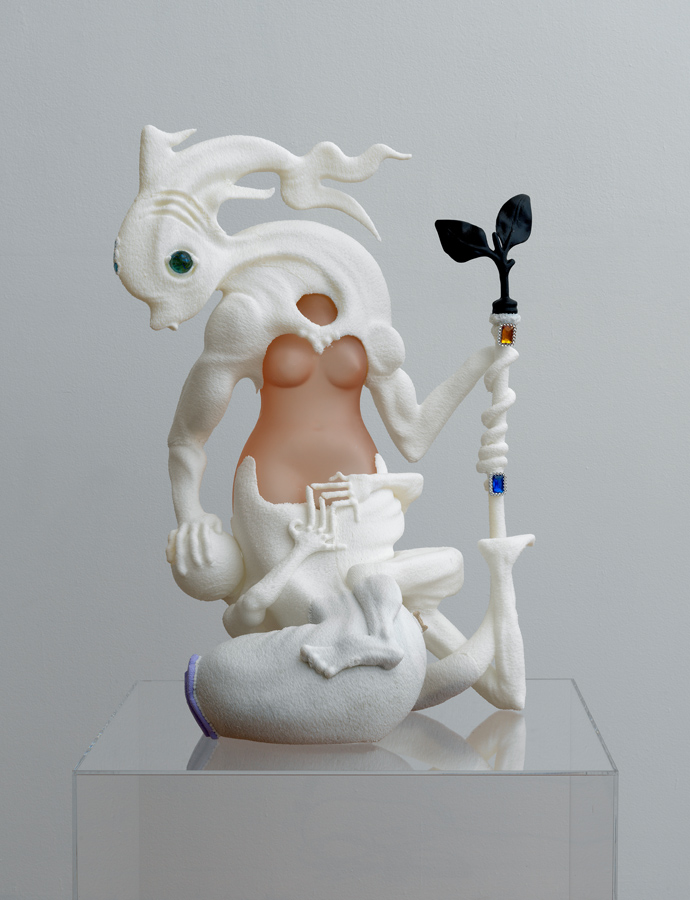
Kévin Bray, Sirens want peace, 2025
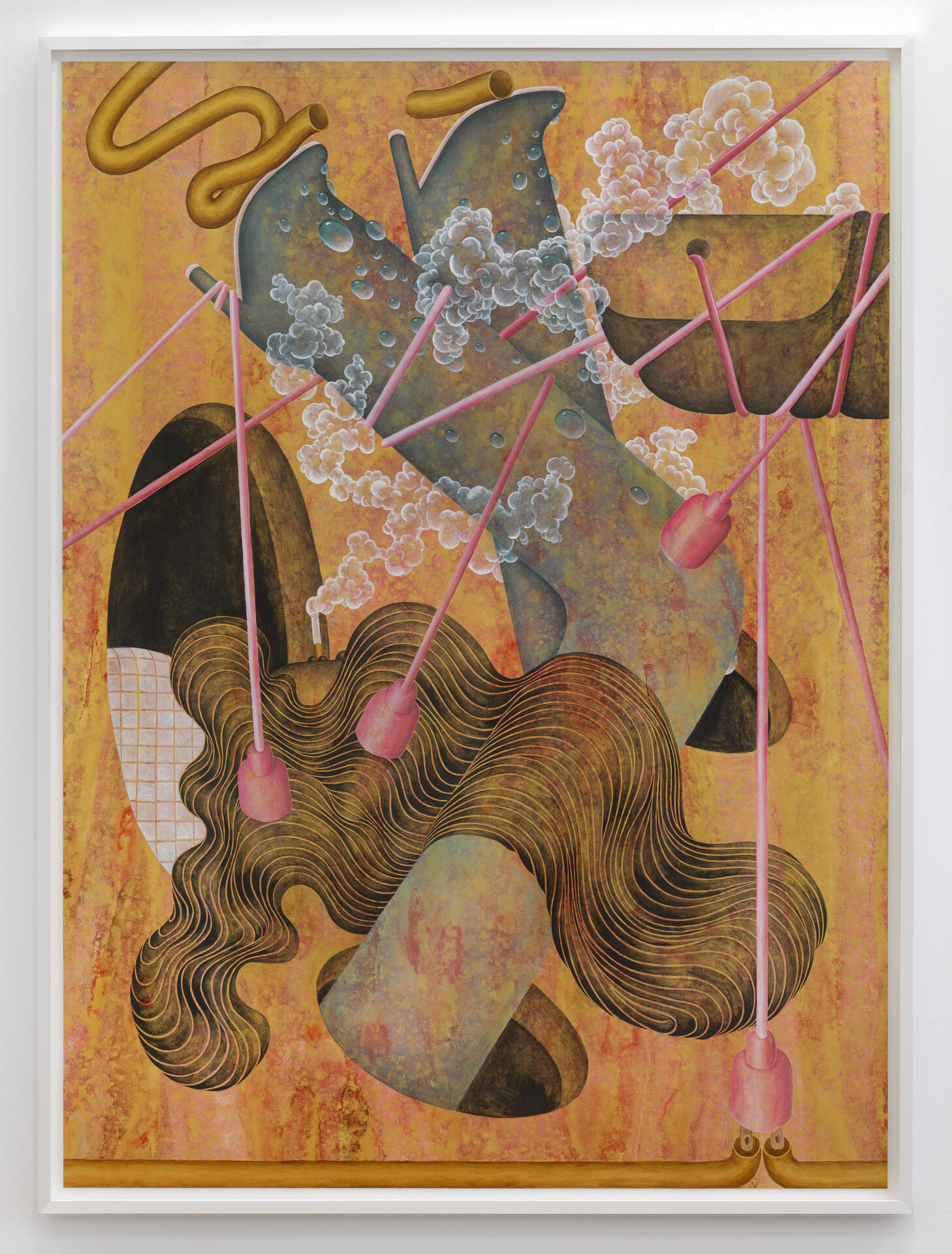
Jen Lui, Labour Cloud (2022), 178 x 131 cm
During Art Antwerp 2025, Upstream Gallery will present a duo exhibition of Kévin Bray (FR, 1989) and Jen Liu (USA, 1976).
Both artists employ a visual language rooted in Surrealism, while remaining strongly connected to the present. Working with diverse materials and in a collage-like manner, they both use fragmented bodies and cartoonish elements, heavily influenced by digital image culture. Beneath this playful surface, Bray and Liu probe the darker sides of digitalisation’s impact on human beings, the body, and society.
Kévin Bray’s hybrid, 3D-printed sculptures are physical manifestations of digitally created figures that regularly appear in his videos or paintings. To these physical sculptures, he adds found objects and paint, giving each work authentic qualities and turning it into a unique object. These figures thus travel through both digital and physical environments, recalling the interconnected and complementary processes they embody. The sculptures demonstrate that digital and physical layers form part of the same reality, constantly in dialogue with one another—both in Bray’s work and in society at large, where social media and algorithms profoundly shape our “physical” lives.
Jen Liu’s works on paper from the Electropore series shimmer in gold and pink. Body parts and objects emerge from cartoonish holes: graphic designs of severed fingers pressing buttons, female figures entangled in cords. Although lighthearted at first glance, the works speak of entrapment within closed structures and allude to the people hidden behind the glossy surface of new technologies. In her practice, Liu focuses on the often-invisible labour of female factory workers in the Global South. In Electropore, she shows how bodies become ensnared in systems of repetitive labour and minimal autonomy. In doing so, Liu makes visible how exploitation and production intertwine, and how the worker herself becomes part of a capitalist machine.
6. Ara Méndez Murillo & Warre Mulder with Whitehouse Gallery
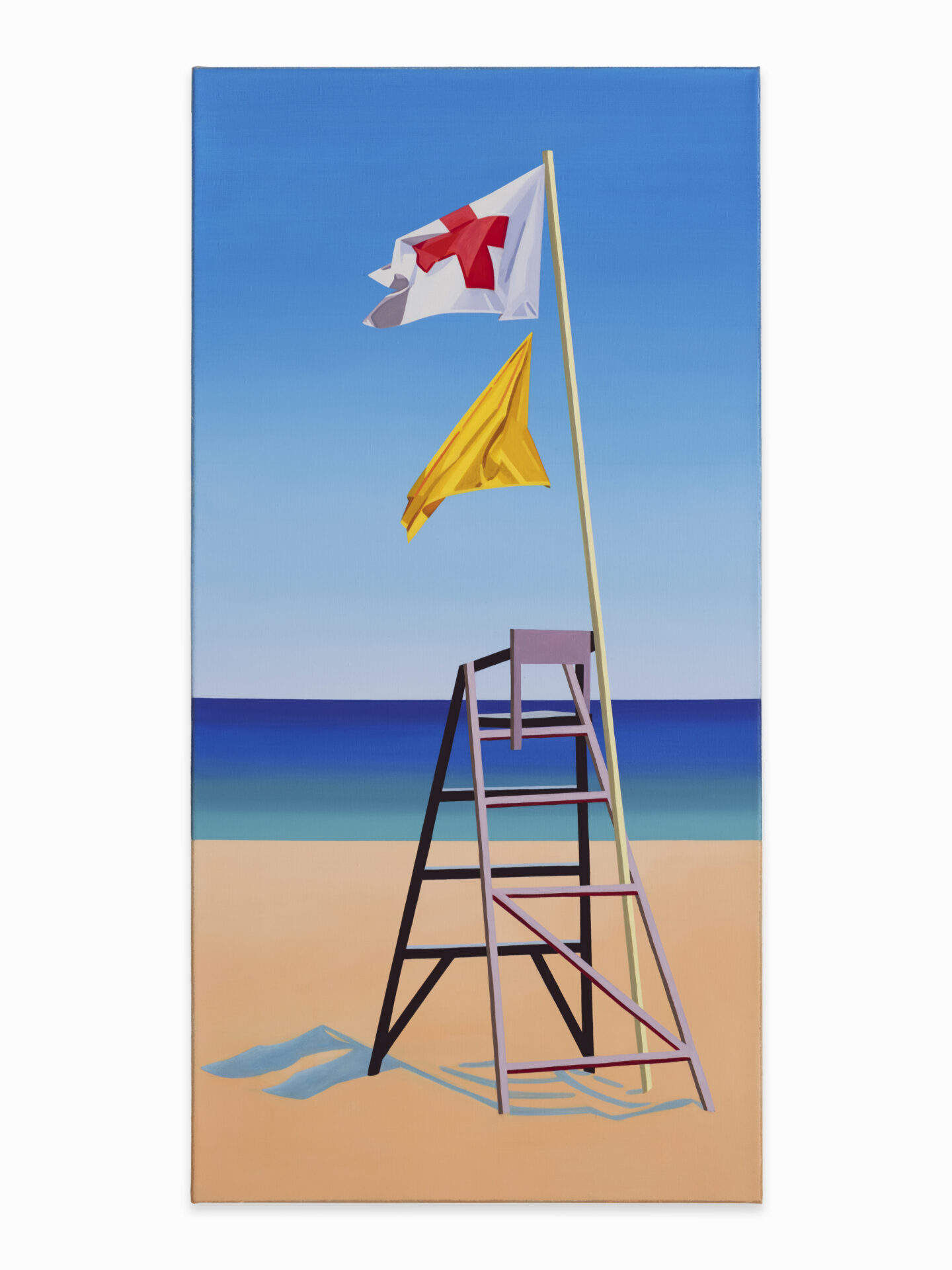
Ara Méndez Murillo
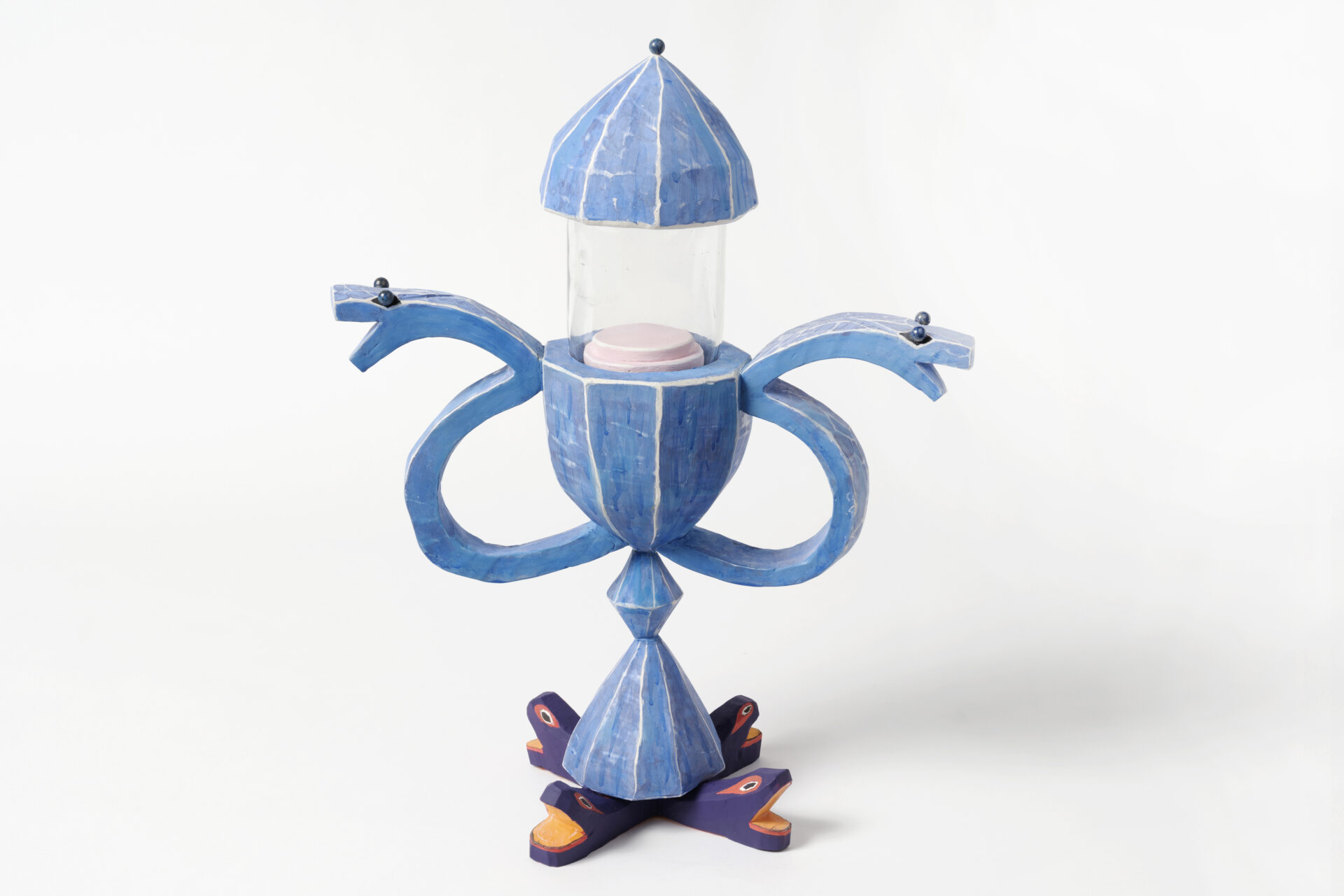
Warre Mulder, Vessel of Beliefs, 2025, 56 x 45 x 20
Whitehouse gallery proposes a duo presentation for Art Antwerp 2025 with Ara Méndez Murillo and Warre Mulder.
Ara Méndez Murillo (Córdoba, 1997) is a visual artist based in Brussels. She began her studies at the University of Seville, where she earned a Bachelor’s degree in Fine Arts. She later refined her pictorial practice in the Painting Department at La Cambre, Brussels, where she graduated in 2022.
Having studied classical music as well as disciplines such as drawing, sculpture, and engraving, her current practice focuses on painting. In her work, she explores the dialogue between purely pictorial elements—such as color and the application of material—and the meanings contained within the represented image.
Ara Méndez Murillo often feels that she perceives only a fragment of what unfolds before her. At times, she senses that the life of things extends far beyond their intended purpose. Under certain light or with a slight shift in focus, objects and spaces seem to become elusive—present yet communicating in an unknown language to an invisible audience. As an exercise in humility, Méndez Murillo seeks to feel as things do, reminding herself that we are all subject to the same arbitrary forces. In doing so, the world takes on a new meaning.
Warre Mulder (°1984, Antwerp) develops an ever-expanding sculptural practice that unfolds as a universe in constant transformation. Walking a fine line between wit and imagination, animation and irony, spontaneity and orchestration, the artist brings hybrid sculptures to life—fantastical beings, human figures, animals, plants, and objects. These creations may evoke archetypes, ancestral statues, guardians, or messengers, often as joyful as they are unsettling. Spirituality and humor, animism and playfulness, associations and meanings intertwine in a personal visual language with universal resonance.
In his studio, Mulder bends a range of materials and sculptural traditions to his will—favoring natural substances such as wood and clay, while occasionally incorporating his own handmade mixtures. His greatest fascination lies in humanity’s primal impulses: the timeless drive to shape, pattern, and symbolize the world as a way of understanding reality.